Simple Fat Loss Diet Plan for Beginners (Full Day Meal Chart)
Most fat loss advice online falls into one of two categories: so complicated it requires a spreadsheet to follow, or so vague it gives you nothing actionable to actually do. Neither is useful when you are just trying to eat better and lose some fat without making your entire life about it.
At New Healthy Curation, we put together this simple full-day fat loss diet plan specifically for beginner people who want a clean, clear starting point without the overwhelm. No calorie counting required. No expensive supplements. No eliminating entire food groups. Just a straightforward structure of real food across the day that supports fat loss by keeping you full, keeping your blood sugar stable, and giving your body what it actually needs.
This is not a crash diet. It is a sustainable eating pattern that beginners can realistically follow and build on over time.
The Core Principle: Clean Food, Simple Structure
Fat loss comes down to one thing consistently supported by research: eating in a way that keeps you full on fewer calories than you are burning, without making you so hungry that you overeat later. The foods in this plan do exactly that: high protein, high fiber, low in processed ingredients, and satisfying enough that cravings are manageable.
The structure is simple: a proper breakfast, a balanced lunch, a smart snack, and a light dinner. Four components, repeated consistently, adjusted to your preferences over time.
Breakfast Start Strong
What to eat:
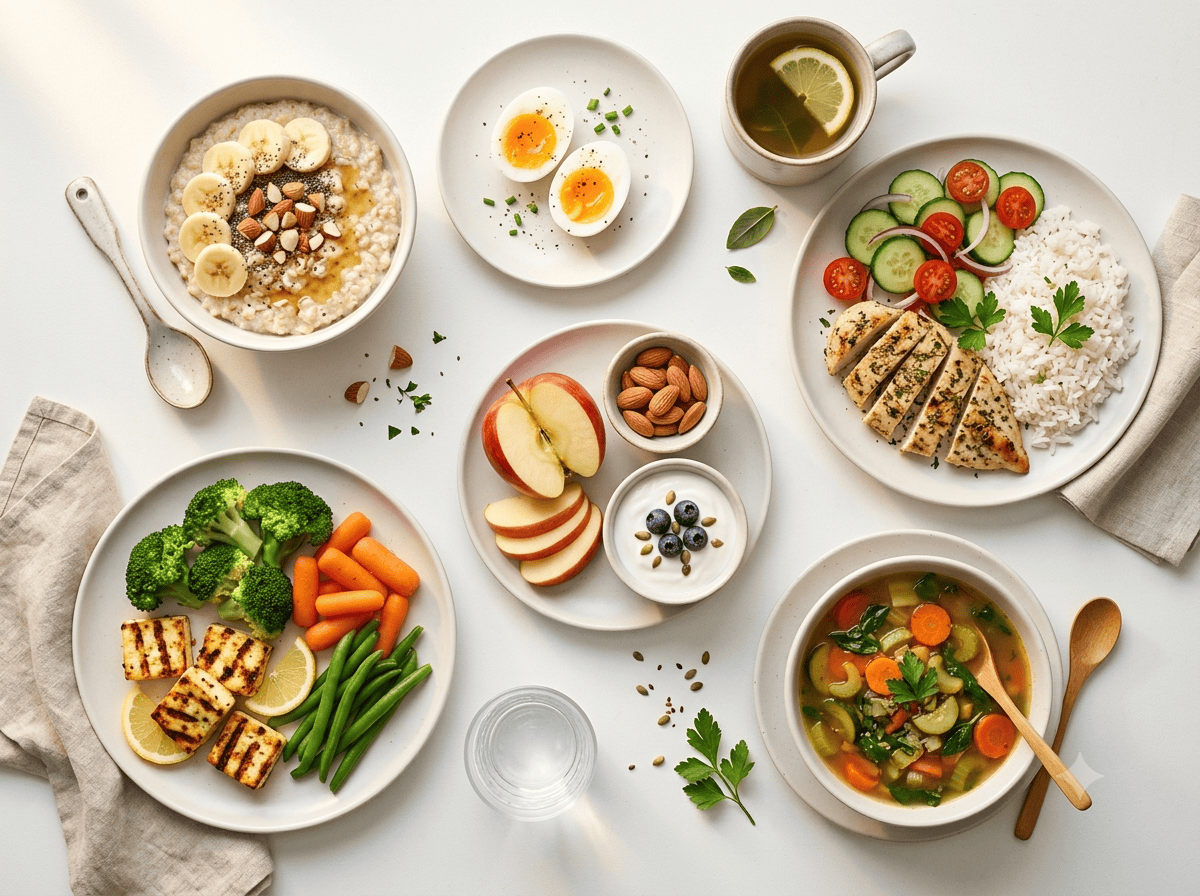
- Oats with banana and a small handful of almonds
- 2 boiled eggs
- Green tea
Why this works:
Oats are one of the most researched breakfast foods for satiety the beta-glucan fiber in oats slows digestion and keeps you full significantly longer than most breakfast alternatives. Adding banana provides natural sweetness and quick energy, while the almonds add healthy fats that extend that fullness further into the morning.
Two boiled eggs add around 12 grams of complete protein to the breakfast protein at breakfast is consistently linked in research to lower total calorie intake across the rest of the day because it reduces appetite hormones.
Green tea adds EGCG, a compound shown in multiple studies to support fat metabolism, alongside a moderate caffeine boost that is gentler than coffee for most people.
This breakfast combination covers protein, complex carbohydrates, healthy fats, and fiber a complete foundation that sets the tone for the rest of the day.
Lunch: The Most Important Meal
What to eat:
- Rice or roti (one serving)
- Grilled chicken or paneer
- Fresh salad (cucumber, tomato, onion, lemon)
Why this works:
Lunch is where most beginners make the biggest mistake, either skipping it (which leads to overeating at dinner) or eating something processed and calorie-dense that spikes blood sugar and causes an afternoon energy crash.
This combination avoids both problems. Rice or roti provides the complex carbohydrates your body needs for sustained energy in the afternoon. Grilled chicken or paneer delivers a high-protein hit that keeps muscle mass intact during fat loss; this matters because muscle is what keeps your metabolism running efficiently. The fresh salad adds fiber, water content, and micronutrients with almost no additional calories.
The keyword here is grilled, not fried. The cooking method makes a significant difference to the calorie content and the overall effect on inflammation and blood sugar.
Snack The Smart Middle
What to eat:
- 1 apple
- 10 to 12 almonds
- A small bowl of plain yogurt
Why this works:
Mid-afternoon hunger is one of the main reasons people fall off a diet plan. The standard response is to reach for something processed biscuits, chips, something sweet which spikes blood sugar, triggers more cravings, and adds empty calories.
This snack is designed to be genuinely satisfying without doing any of that. An apple provides fiber and natural sweetness that curbs sugar cravings. Ten to twelve almonds add healthy fats and protein that extend satiety. Plain yogurt adds protein and probiotics that support gut health, and a healthy gut is increasingly linked in research to better weight management outcomes.
Together these three things keep you comfortably full from lunch to dinner without derailing the calorie balance of the day.
Dinner — Keep It Light
What to eat:
- Vegetable soup (any vegetables)
- Grilled paneer or chicken
- Steamed vegetables
Why this works:
Dinner is the meal where most people overeat usually because they are tired, stressed, and hungry after a long day. The solution is not willpower, it is structure: a dinner that is satisfying enough to feel like a proper meal but light enough not to interfere with sleep quality or push you into a calorie surplus.
Vegetable soup at the start of dinner is one of the most consistently researched appetite management tools available. Studies show that eating a low-calorie soup before a meal reduces total calorie intake at that meal by a meaningful amount simply because it occupies stomach space and signals early satiety.
Grilled paneer or chicken at dinner maintains the protein intake needed to protect muscle through the night. Steamed vegetables add bulk, fiber, and micronutrients with very few calories.
This dinner is filling, genuinely satisfying, and light enough that sleep is not disrupted by a heavy meal sitting in your stomach.
Four Habits That Make This Plan Work
The meals above are the foundation. These four habits are what make the foundation actually deliver results.
Drink more water. Most people are mildly dehydrated for most of the day and frequently mistake thirst for hunger. Drinking water consistently throughout the day particularly a large glass before each meal reduces overall calorie intake and supports every metabolic process involved in fat loss.
Avoid junk food. This sounds obvious but the practical version matters: the issue is not occasional treats, it is the regular background consumption of processed foods biscuits with tea, chips while watching something, sugary drinks that adds hundreds of calories per day without registering as “eating.” Removing these consistently is where most of the fat loss actually comes from for beginners.
Sleep 7 to 8 hours. Sleep deprivation directly increases hunger hormones ghrelin goes up, leptin goes down making it significantly harder to stick to any eating plan regardless of how good your intentions are. Getting consistent sleep is not optional for fat loss, it is foundational.
Stay consistent. One perfect week followed by two weeks of eating randomly produces worse results than six weeks of eating reasonably well most of the time. Consistency over perfection is the principle that separates people who actually lose fat from people who stay stuck in the cycle of starting over.
The One Thing Nobody Talks About — Movement
Here is something worth knowing that most diet plans leave out entirely: what you eat matters enormously, but how much you move throughout the day matters just as much and often more than people expect.
We are not talking about intense gym sessions or complicated workout programs. We are talking about walking.
Walking is the most underrated fat loss tool available and it costs nothing. A 30 to 45 minute walk after lunch or dinner does several things simultaneously it lowers blood sugar spikes from the meal you just ate, it burns additional calories without triggering the kind of hunger that intense exercise causes, and it genuinely reduces stress hormones that drive fat storage around the midsection.
If you can add one habit alongside this meal plan, make it a daily walk. Start with 20 minutes after dinner. Build to 30 minutes. Eventually aim for 8,000 to 10,000 steps per day spread across the whole day a short walk in the morning, movement during lunch, and a proper walk in the evening.
A few other small movements that add up significantly over a week:
Taking stairs instead of lifts every single time. Standing up and walking around for two minutes every hour if you have a desk job. Parking further away or getting off public transport one stop early. These are not dramatic changes but they add thousands of extra steps per week without requiring any dedicated workout time.
The combination of this meal plan plus consistent daily walking is genuinely more effective for fat loss than either one alone. The food controls what goes in. The movement increases what goes out. Both working together is where results actually happen.
What to Expect
Following this plan consistently for two to four weeks, most beginners notice reduced bloating first, followed by steadier energy throughout the day, and then gradual changes in how clothes fit. Scale weight changes more slowly and varies significantly based on water retention, sleep, and other factors using how you feel and how your clothes fit is a more reliable indicator of progress in the early weeks.
This plan is a starting point, not a permanent rigid structure. As you build the habit of eating this way, you will naturally adjust portions, swap foods based on preference, and find what works best for your schedule and lifestyle.
We suggest following this plan for at least three to four weeks before evaluating results. Consistency is what produces the outcome not perfection on any single day.
Let us know in the comments which meal in this plan you found most practical to follow we use that feedback to refine and improve our guides.
Disclaimer: This content is for general informational and educational purposes only and is not intended as medical or nutritional advice. Individual results vary based on age, health status, activity level, and other factors. Always consult a qualified healthcare professional or registered dietitian before making significant changes to your diet, particularly if you have any existing health conditions.