10 Anti-Inflammatory Foods You Should Eat Every Day
Inflammation gets talked about constantly in the wellness world, but most of what gets shared online is either too vague to act on or trying to sell you something expensive. The reality is that some of the most powerful anti-inflammatory ingredients on the planet are sitting in ordinary grocery stores, cost almost nothing, and most people are simply not eating enough of them.
At New Healthy Curation, we research what actually works, not what looks good in a smoothie bowl photo. This list comes from real clinical research, and every food on it has meaningful evidence behind it. No supplements, no exotic powders, no expensive protocols. Just ten foods worth adding to your regular rotation and a simple way to make sure you actually eat them.
What Is Inflammation and Why Anti Inflammatory Foods Matter
Chronic low-grade inflammation is linked to heart disease, accelerated aging, cognitive decline, and a long list of conditions that most people spend years trying to manage. The good news is that food has a measurable impact on inflammatory markers in the body. Specific compounds found in everyday foods polyphenols, omega-3 fatty acids, fiber, carotenoids work through documented biological pathways to reduce inflammation over time.
This is not alternative medicine. These are mechanisms that have been studied in clinical trials, measured in blood markers, and replicated across multiple research groups. The foods below are the ones that show up consistently in that research.
1. Berries
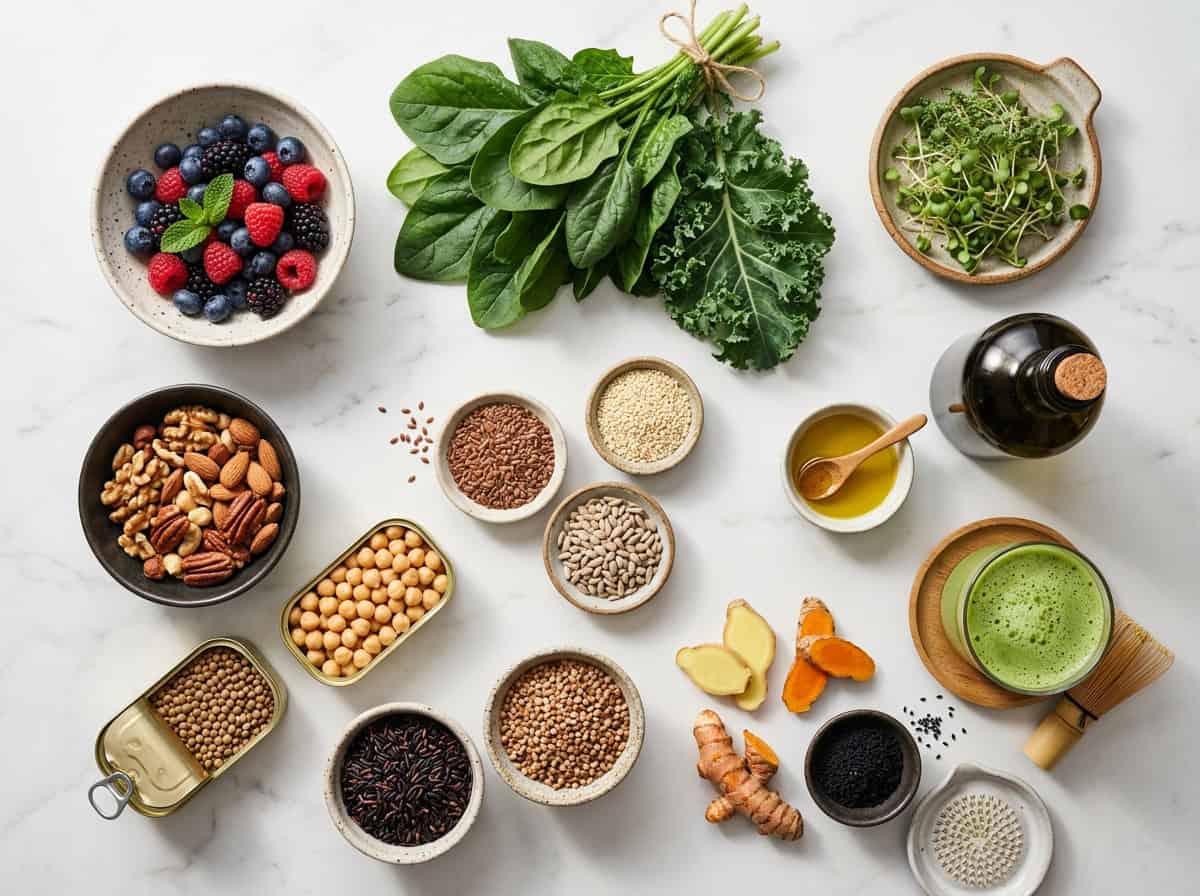
A cup or two of berries most days has shown measurable effects on cholesterol levels, blood vessel health, and overall cardiovascular risk in multiple studies. The compounds responsible are called anthocyanins, the pigments that give berries their deep color, and different berries carry different variations of these compounds.
Blueberries, blackberries, raspberries, and black currants are among the highest sources. The practical takeaway: mixing different berries gives you a wider range of benefits than sticking to one type. Frozen berries work just as well as fresh and are significantly easier to keep on hand. Tossing a handful into oats, yogurt, or a smoothie in the morning is one of the simplest anti-inflammatory habits you can build.
If using a berry powder, look specifically for freeze-dried versions — that method preserves the widest range of nutrients compared to other drying processes.
2. Dark Leafy Greens
Spinach, kale, chard, rocket, and similar greens contain a class of compounds called carotenoids, including lutein, that act as a kind of shield against oxidative stress, which is one of the primary drivers of chronic inflammation.
One study found that people who ate a carotenoid-rich diet showed lower inflammatory signals, and just one portion of greens per day, around 80 grams, was associated with slower cognitive decline equivalent to being roughly 11 years younger in brain age. That is a significant finding from a relatively small daily habit.
The darker the green, the richer it tends to be in these compounds. Rotating between cooked and raw greens also helps preserve different nutrients some are better absorbed with heat, others without.
3. Broccoli Sprouts
This one surprises most people. Broccoli sprouts, the plant at its very earliest stage of growth, can contain up to 50 times more anti-inflammatory compounds than fully grown broccoli.
When chewed, they release a compound called sulforaphane that activates a cellular pathway involved in the body’s detoxification and anti-inflammatory response. In one controlled trial, 40 overweight adults who ate just 30 grams of fresh broccoli sprouts daily for 10 weeks saw their inflammatory markers drop by up to 59%.
Sprouts can be grown at home with minimal equipment: soak seeds, rinse twice a day, and after about five days they are ready to add to salads, grain bowls, or avocado toast. They add a mild peppery crunch and are genuinely easy to incorporate once the habit is established.
4. Extra Virgin Olive Oil
Quality extra virgin olive oil is one of the most studied foods in the context of inflammation, largely because of its central role in the Mediterranean diet. The anti-inflammatory effect comes not just from its healthy monounsaturated fats but from specific polyphenols oleocanthal and oleuropein- that work on some of the same inflammatory pathways as ibuprofen, through a gentler and more cumulative mechanism.
Just seven grams per day, roughly a drizzle, was associated with a 28% lower risk of dying from dementia-related causes in one large study. The key is quality. Look for cold-pressed, stored in a dark glass bottle, with a harvest or press date within the past year. Good extra virgin olive oil should have a noticeable peppery hit at the back of the throat — that sensation is the polyphenols.
Contrary to popular belief, olive oil is stable for low to medium heat cooking. The polyphenols actually protect it from heat degradation up to around 180 degrees Celsius.
5. Nuts
A handful of mixed nuts per day, about 28 grams, has been linked to lower inflammation, better cholesterol profiles, and a 19% lower risk of heart disease across multiple studies. Nuts are often avoided because of their calorie density, but these are not empty calories. They come packaged with healthy unsaturated fats, antioxidants, fiber, minerals like magnesium and zinc, and polyphenols that directly reduce inflammatory markers.
Walnuts, pecans, almonds, and chestnuts are among the highest in polyphenols. Mixing varieties rather than sticking to one type gives a broader range of benefits. Keeping a jar of unsalted mixed nuts accessible is one of the simplest ways to make this a consistent daily habit a handful over oats, into a salad, or as a standalone snack.
6. Seeds
Seeds are often used as a garnish, but they deserve more credit than that. Flaxseeds, sesame seeds, and sunflower seeds each carry their own distinct anti-inflammatory compounds, and together they add up to meaningful daily benefits.
Ground flaxseed contains a compound called SDG (secoisolariciresinol diglucoside) that has well-documented anti-inflammatory properties. Studies suggest 10 to 30 grams per day is enough to see effects easily achieved with a tablespoon or two in oats or a smoothie. Ground flax absorbs better than whole seeds and should be stored in the fridge to preserve its compounds.
Sesame seeds contain sesamin, which helps protect blood vessels and lower inflammation. Tahini (ground sesame paste) is an easy way to get this into dressings and sauces regularly. Sunflower seeds, often overlooked, are rich in vitamin E and polyunsaturated fatty acids with documented cardiovascular and anti-inflammatory benefits. Even one to two tablespoons daily shows measurable effects in research.
7. Legumes
Beans and lentils reduce inflammation through a mechanism that most people have not connected yet: they feed the gut microbiome. The fiber in legumes is fermented by gut bacteria in the large intestine to produce short-chain fatty acids, compounds that strengthen the gut barrier and, in doing so, reduce systemic inflammation throughout the body.
Beyond the gut angle, legumes also stabilize blood sugar, preventing the kind of large glucose spikes that drive up inflammatory markers over time. And like berries, they are rich in polyphenols that have direct anti-inflammatory effects.
Research suggests around 400 grams of cooked legumes per week roughly three to four heaped tablespoons per day is enough to see these benefits. Adding chickpeas to a salad, swapping half the meat in a sauce for lentils, or keeping a tin of beans as a ready addition to any meal are the most practical ways to hit this consistently.
8. Whole Grains
There is a meaningful difference between refined grains and actual whole grains not just “brown bread” (which is often white flour with added color) but real whole grains like buckwheat, black rice, barley, and sorghum that retain their bran and germ, where the fiber, phenolic acids, and flavonoids are concentrated.
Black rice gets its color from anthocyanins, the same compounds found in berries. Buckwheat is high in rutin, a flavonoid with documented anti-inflammatory properties. Red and brown sorghum contain unique compounds called luteolinidin and apigeninidin. In one study, red sorghum pasta increased polyphenol levels in the blood and improved antioxidant defenses within just two hours of consumption.
Around 200 grams of cooked whole grains per day is enough to see the benefits. Swapping white rice for black rice, or incorporating buckwheat into a weekly rotation, is a straightforward change with measurable impact.
9. Spices
Spices are concentrated sources of anti-inflammatory plant compounds, which means even small daily amounts have real biological effects.
Ginger contains gingerols and shogaols, the compounds responsible for its distinctive flavor, and these have been shown in trials to lower inflammatory markers like CRP and TNF-alpha. About a thumb of fresh ginger or a teaspoon of ginger powder daily is enough.
Turmeric contains curcumin and related curcuminoids that have been shown in clinical trials to ease pain and stiffness comparably to ibuprofen. It has also appeared in studies examining cancer risk reduction. Used in cooking daily, it adds both color and documented anti-inflammatory benefit.
Nigella (black cumin) contains a compound called thymoquinone with some of the strongest evidence for reducing inflammation within weeks of regular use. It has a distinctive aromatic flavor and works well ground into dishes or added to grain bowls.
Studies show benefits from as little as one to three grams per day across multiple spices, roughly a teaspoon, which is a very achievable daily target.
10. Anti-Inflammatory Drinks
What you drink matters as much as what you eat. Green tea and matcha are rich in EGCG (epigallocatechin gallate), a compound shown in multiple studies to lower inflammation and improve blood vessel function. Water at around 80 degrees Celsius, just off the boil, preserves the delicate polyphenols better than boiling water.
Coffee, when made from quality beans, is one of the most polyphenol-rich drinks available. Over 20,000 studies have documented its antioxidant properties. Two to three cups before 11 am appears to be the sweet spot based on available research. For those sensitive to caffeine, mountain-water processed decaffeinated coffee preserves much of the polyphenol content.
Pomegranate juice, hibiscus tea, and blueberry or black currant juice are also rich in anti-inflammatory polyphenols. The important caveat with any of these: added sugar or sweeteners can cancel out the anti-inflammatory benefits. Homemade versions without added sugar are significantly more effective than commercial versions.
For more healthy drink ideas, check out our
5 Healthy Summer Drinks guide.
The Simple Daily Habit That Ties All of This Together
Keeping track of ten different food categories sounds overwhelming. A practical shortcut that covers most of the ground above is simply asking at the end of each day: have I had my BBGs?
Beans. Berries. Greens. Seeds. And nuts.
Not all of them at every meal, just woven throughout the day in whatever form is easiest. A handful of berries in the morning. Some leafy greens at lunch. A handful of nuts as a snack. Beans or lentils at dinner. Seeds on top of whatever you are already eating.
That daily consistency not perfection, just regularity is what the research actually supports. Inflammation does not respond to occasional effort. It responds to what you eat most of the time.
We suggest saving this guide and working through the list gradually rather than trying to overhaul everything at once. Add one or two of these foods to your regular rotation this week and build from there.
This content is for informational purposes only and is not intended as medical advice. Always consult a qualified healthcare professional before making significant changes to your diet.